Vera Schmitz · 2 September 2026
Breakthrough in Nucleotide Excision Repair Efficiency
Researchers at Helix Laboratory have identified novel regulatory proteins that enhance nucleotide excision repair pathways, improving cellular response to ultraviolet-induced DNA damage. The study, led by Dr. Elena Voss, demonstrates that the protein complex HLX-47 binds directly to damaged DNA segments, accelerating repair rates by up to 40 percent in laboratory cell lines. Experiments conducted over 18 months used CRISPR-edited human fibroblasts to validate the mechanism, showing reduced mutation accumulation compared to control samples.
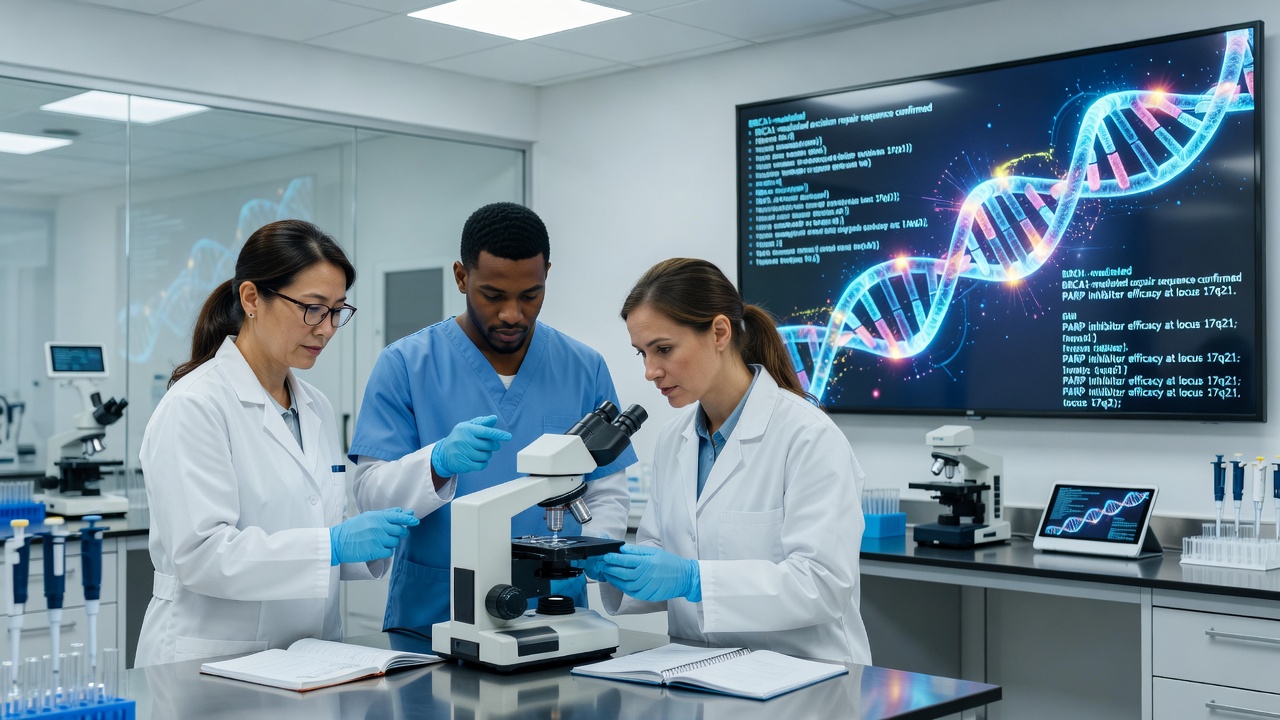
Further analysis revealed that HLX-47 interacts with existing repair enzymes such as XPA and XPG, stabilizing the incision step of the pathway. This interaction was confirmed through co-immunoprecipitation assays and fluorescence microscopy, providing visual evidence of localized recruitment at damage sites. The findings suggest potential applications in mitigating photoaging and certain skin cancers where repair deficiencies are common.
Broader Implications for Genomic Stability Research
Additional work at the laboratory explored how these advances extend to other repair systems, including base excision repair and homologous recombination. Integration of HLX-47 overexpression in yeast models resulted in heightened resistance to oxidative stress, indicating cross-pathway benefits. Quantitative PCR data showed upregulated expression of downstream genes involved in cell cycle checkpoints, reducing apoptosis in stressed cells.
Collaborations with external genomics centers have begun to test these insights in patient-derived samples from individuals with xeroderma pigmentosum. Early results indicate that targeted modulation of the identified pathway could restore partial function in defective cells. Helixlab plans continued investigation into small-molecule activators that mimic HLX-47 effects, aiming for therapeutic development. The research underscores the laboratory's commitment to advancing understanding of DNA maintenance mechanisms essential for organismal health.