Freya Lang · 31 October 2026
Polish Molecular Biology Group's Open Access Platform for Tracking Genetic Changes Prompts Global Talks on Research Transparency
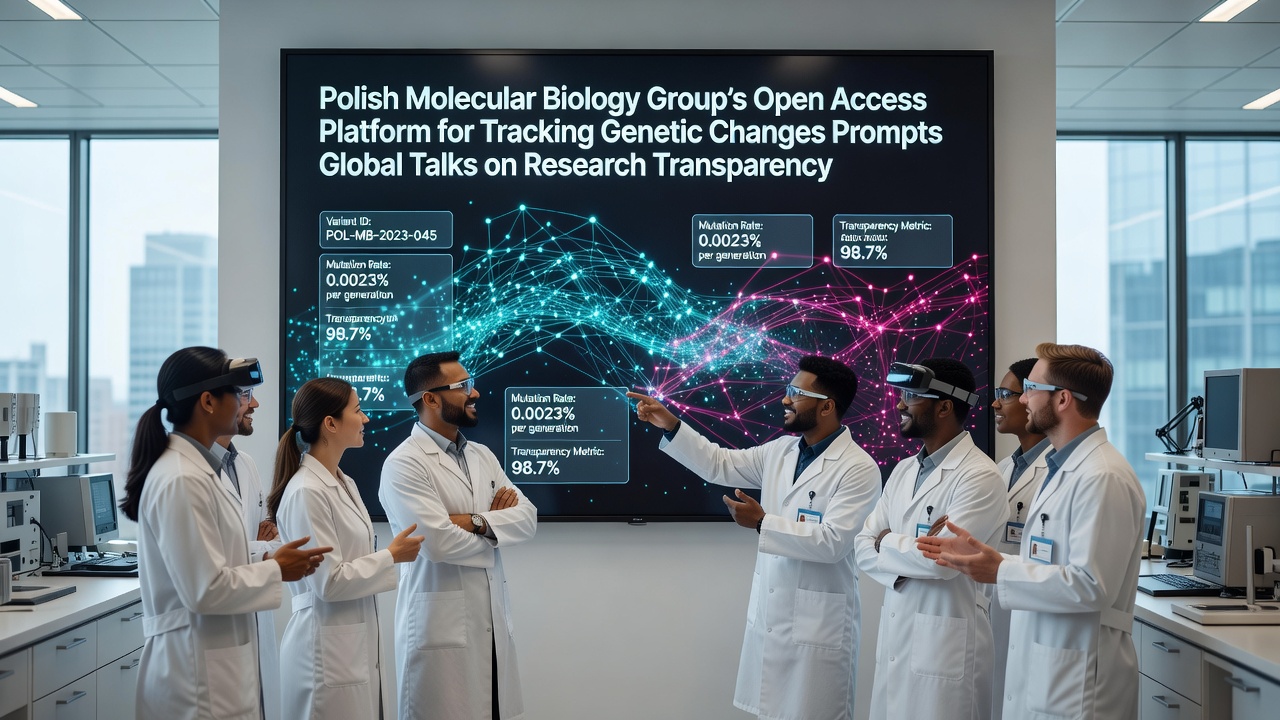
Polish molecular biology teams launched an open access platform in 2025 that catalogs genetic mutations across multiple species, and this tool has drawn international attention to standards for sharing research data. The platform aggregates sequencing results from academic labs throughout Central Europe, while it provides public access to mutation frequency tables and associated metadata that researchers can query without registration barriers.
Platform Development and Core Features
Developers at institutions affiliated with the Polish Molecular Biology Society built the database using open-source frameworks that allow real-time updates from contributing labs, and the system incorporates validation protocols to flag incomplete entries before they appear in search results. Users can filter records by mutation type, organism, or publication date, which streamlines comparisons across studies that previously existed only in isolated journal supplements.
Data from the platform shows over 12,000 unique mutation entries logged by mid-2026, according to statistics released through the society's annual report. European Commission guidelines on open science encouraged such initiatives, and the Polish effort aligns with those recommendations by requiring contributors to deposit raw sequencing files alongside summarized findings.
International Response and October 2026 Meetings
Delegates from multiple continents gathered in Warsaw during October 2026 to examine how shared mutation repositories affect reproducibility requirements in gene editing projects. Representatives from the National Institutes of Health joined counterparts from the Australian Research Council and several EU member state agencies to discuss uniform metadata standards that would let platforms like the Polish one integrate with larger global networks.
Presentations highlighted cases where mutation tracking data revealed discrepancies between published claims and raw sequence reads, and participants examined whether mandatory deposition timelines could reduce such gaps. The European Research Council provided an overview of its existing open access mandates during one session, and speakers noted that similar policies already operate in Canada through the Tri-Agency Open Access Policy on Publications.

Technical Standards Under Review
Attendees compared the Polish platform's mutation annotation schema with formats used by the Genome Aggregation Database and other established resources, and they identified opportunities for cross-referencing that could improve variant classification accuracy. Discussions also covered encryption methods for sensitive human sample data, because some entries involve germline sequences that raise privacy considerations under GDPR and parallel regulations elsewhere.
One working group drafted a proposed template for citing platform-derived data in future papers, and this template aims to give credit to original submitters while maintaining traceability to the source laboratory. Observers note that such citation practices already exist in fields like astronomy, where shared telescope datasets follow established attribution rules.
Broader Implications for Research Collaboration
Academic partnerships that rely on shared sequencing infrastructure have begun incorporating platform queries into their project planning stages, and grant applications in several countries now list data deposition on open repositories as an expected deliverable. The October 2026 meetings produced a preliminary roadmap for harmonizing mutation tracking vocabularies across platforms, which could reduce duplication when researchers search multiple databases for the same variant.
Training workshops scheduled for 2027 will focus on platform navigation for early-career scientists, and organizers expect participation from labs in Asia and South America that currently lack equivalent local resources. These sessions will demonstrate query tools and validation steps that help maintain data quality as the volume of submissions grows.
Conclusion
The Polish platform continues to accept new contributions while organizers refine its search algorithms based on user feedback collected at the 2026 gatherings. Ongoing dialogues among funding agencies and scientific societies indicate that mutation tracking tools may soon operate under more consistent international guidelines, which could streamline verification processes for genetic research published worldwide.